
In India, it is not easy to fight it out with the large banks which are nimble-footed and technology-savvy and are continuously innovating on the retail turf with newer products for customer acquisition.

In a written reply in the Rajya Sabha Minister of State for Finance Namo Narain Meena pointed out that this amounted to 3.48 per cent of the total advances given by the state-owned banks.

If there is any actor who emerges from this wreck with his talent unscathed, it is Vijay Raaz, observes Deepa Gahlot.

'On the evening of the 17th, the RBI said the bank was put on moratorium.' 'Within an hour, the RBI said it would be merged with DBS.' 'How did DBS come to know within an hour that LVB was in trouble?' 'It means, what happened was match-fixing.'

Government unlikely to bring in an ordinance to address the developments arising out of the Supreme Court order.

The Bad Boy Billionaires series has a lot in common: The three billionaires' hefty ambition, dangerous arrogance and untrammeled power, observes Dhruv Munjal.

Move to increase 90-day window to 120 days to give more time to borrowers to service loans.

Raghuram Rajan's 'surgery' uncovers more bad loans

Every banker loves the four-letter word Casa as it plays an important role in lowering the cost of deposits. Every bank wants to increase its Casa, as a higher portion of Casa in the overall deposit liability brings down its cost of money, points out Tamal Bandyopadhyay.

It is difficult to say if the banking sector will see the worst behind it by March 2020, warns Tamal Bandyopadhyay.

Transiting from "survival mode", which took most of the management time in FY21, the bank has been able to take a long-term view in terms of growth and preparing technology in the past 12 months.
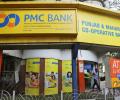
Mired in corruption, politics and with a history of suicides by its hapless depositors, PMC Bank's revival is a challenge very different from Yes Bank and LVB, both for the regulator and the rescuer, observes Tamal Bandyopadhyay.

The party's research department team, which Rajya Sabha member M V Rajeev Gowda heads, has sifted through the suggestions received in the last five months, and the manifesto is slated to be released later this month, reports Archis Mohan.

In the new decade, the scene will change because the banks till recently had been challenged by the fintechs, but the techfins have now entered the arena, observes Tamal Bandyopadhyay.

Where do Vijay and his TVK expect to get their votes from? Vijay has a huge fan following among women, but will they automatically become his voters like they had done for MGR's AIADMK, asks N Sathiya Moorthy.

IMAGES from Day 5 of the Wimbledon Championships, at the All England Lawn Tennis and Croquet Club, London, on Friday.

The Congress on Thursday accused the Modi government of aiding 'drain of wealth' from ordinary Indians to crony corporates, and said it will end this practice if it comes to power at the Centre.

The order came days after Goyal told the court that he had "lost every hope of life and it would be "better if he died in jail" than living in such a situation.

Ambani's group companies are stated to have taken loans of about Rs 12,800 crore from the bank that turned NPAs.

Given that Twelve Final Days doesn't really delve into the genesis of Roger Federer, the ups and downs of his career, the assumption is that it is meant for people who are already familiar with his work, observes Deepti Patwardhan.

Is the worst over for Indian banks? The past two years saw them ride on treasury trades as deposits soared and credit growth dipped sharply. Gross and net non-performing assets (NPAs) moved south, and the provision coverage ratio (PCR), capital buffers, and profitability indicators are back at pre-pandemic levels. So, what's the plot ahead?
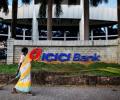
ICICI Bank on Saturday reported 24.7 per cent rise in consolidated net profit at Rs 6,092 crore for September quarter 2021-22. The private sector lender had posted a net profit of Rs 4,882 crore in the same quarter of the previous fiscal year. Total income however grew marginally to Rs 39,484.50 crore in the quarter from Rs 39,289.60 crore in the same period of 2020-21, ICICI Bank said in a regulatory filing.

He also said a total of Rs 38.75 crore, deposited by people in the Karavannur Cooperative bank in this district, which is now facing charges, had already been returned.

Bank strike continued for day-two on Tuesday, led by nine unions of public sector banks (PSBs) in the country, opposing government's policy to privatise the lenders. Customers will be inconvenienced to get services such as cash withdrawals, deposits, cheque clearances, remittance services. Government transactions related to treasury as well as business transactions will also be impacted. United Forum of Bank Unions (UFBU), an umbrella body of nine unions, had given a strike call for March 15 and 16.

According to an air traffic controller at Jomsom Airport, they was an unconfirmed report about a loud noise reported in the Ghasa region of Jomsom, according to the Post report.

'In their over-enthusiasm to clean up the system, both the banks and the regulator should not forget that the key to the insolvency law is revival of companies -- recovery of bank dues is an offshoot of that,' points out Tamal Bandyopadhyay.

P2P platforms do not have the safety net. Instead of playing the role of an intermediary, if they run their own balance sheets for safety and growth, it's a recipe for disaster, warns Tamal Bandyopadhyay.

Its obsession for growth, chasing corporate clients and giving up its original mandate of meeting the needs of local trade and businesses. A quarter of its loan book has gone bad. That's an error of business strategy, points out Tamal Bandyopadhyay.

Dream hillstation project Lavasa, near Pune, is now a millstone around lenders' neck.
The relatively poor performance of government-owned banks comes at a cost to taxpayers.

'The Constitution of India defeated the BJP.'
A recent KPMG survey highlights the huge potential for banks to grow their market with the rise in mobile phone subscribers in India. The most profound impact of mobile banking and payment services is that they provide the non-banking population with access to modern financial services, giving them tools to improve their living standards. Innovative m-banking services are fast arriving in the market.

People are availing far more of certain kinds of unsecured loans than was the case before the pandemic. Bank lending for buying consumer durables and funding of credit cards and other personal loans have risen by Rs 6.9 trillion between August 2019 and August 2023, shows a Business Standard analysis of data from the Reserve Bank of India (RBI). These loans are typically unsecured, which means they are provided without collateral.
The Indian banking sector that has remained almost immune to the global economic slowdown is in for a tough time as non-performing assets of banks are expected to more than double to 5 per cent of total advances in the next two years, says an analyst.

Bad loans continue to originate mainly from state-owned banks, where the top management's responsibility is not linked to career prospects nor has legal consequences, says Debashis Basu.
Subsequent data revisions revealed that growth had not slowed that sharply.

'The snakes and ladders game will continue till the consolidation process is complete simply because we don't know how bad the scene is, with some of the banks being merged,' says Tamal Bandyopadhyay.

'The finance ministry and public sector banks have tried to keep the names of wilful defaulters secret.' 'Secrecy and concealing information are inbred among banks and even the RBI,' observes Debashis Basu, editor, www.moneylife.in.

The Indian financial system's asset quality improved despite the pandemic, but it could be due to special dispensations by the regulator, and banks would likely see increased stress on their books once the schemes expire. According to the annual trend and progress report of the Reserve Bank of India (RBI) released on Tuesday, the data available for this financial year so far indicate that banks' bad debts have moderated while provision coverage ratios (PCRs), capital buffers as well as profitability indicators have improved relative to pre-pandemic levels.

Some of the services like cash deposit and withdrawal at the counter and cheque clearances have been impacted due to the strike by banking staff.
 © 2026 Rediff.com - Advertise with us - Disclaimer - Privacy Policy - Sitemap - Feedback - About us - Terms of use - Grievances